Case Study: How Food Brands Can Leverage HyperVend’s On-Demand Perishable Infrastructure to Dominate Local Markets and Scale Rapidly

In an era where convenience and efficiency drive consumer preferences, food brands must innovate to stay competitive. HyperVend’s on-demand perishable infrastructure, combining smart vending machines with mobile refrigeration technology, presents a transformative opportunity. By drastically reducing capital expenditure (CapEx) and enabling rapid city-to-city scaling, HyperVend allows food brands to dominate local markets while meeting consumer demand for fresh, quality products. This case study explores how HyperVend empowers brands to achieve these goals effectively.
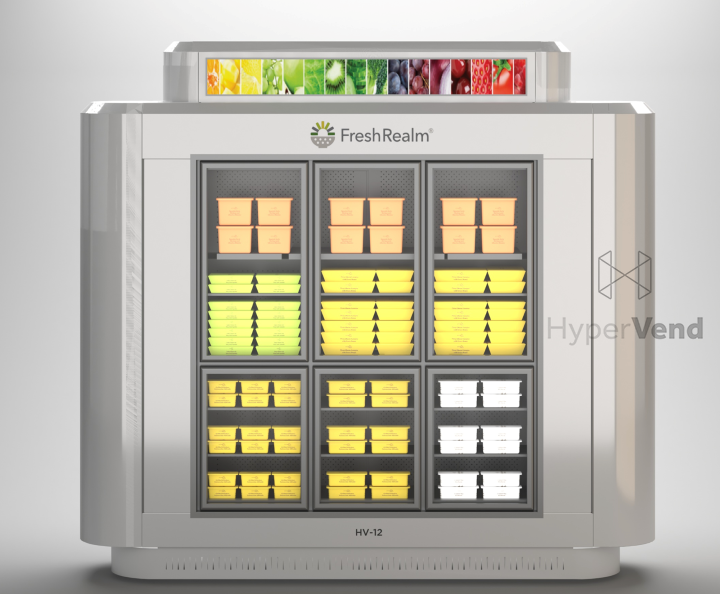
Fresh Relam
The Problem: Challenges in Traditional Distribution Models


Scaling a food brand traditionally involves high upfront investments in real estate, distribution infrastructure, and operational resources. Common challenges include:

  1. High CapEx: Leasing or purchasing retail space, setting up cold storage, and deploying refrigerated delivery fleets require significant financial outlay.
  2. Limited Flexibility: Static retail locations limit the ability to test new markets or pivot based on consumer demand.
  3. Operational Inefficiencies: Managing inventory, ensuring freshness, and reducing waste across multiple locations can be complex and costly.
  4. Barriers to Entry: Smaller brands often lack the resources to compete with established players in securing prime locations or building expansive infrastructure.

HyperVend’s solution addresses these challenges by providing an agile, scalable, and cost-efficient alternative.

The Solution: HyperVend’s On-Demand Perishable Infrastructure

HyperVend’s ecosystem comprises smart vending machines and mobile refrigeration units designed for flexibility and efficiency:
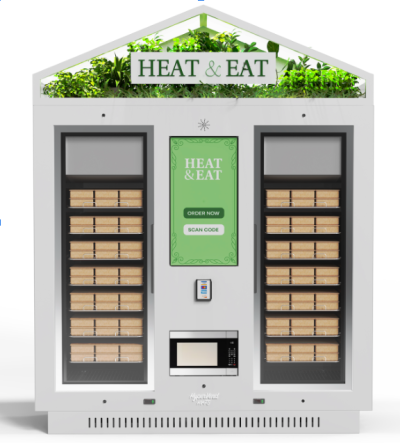
  1. Smart Vending Machines:
  • Equipped with IoT technology to monitor inventory, sales trends, and machine health in real time.
  • Strategically placed in high-traffic areas such as office complexes, residential communities, gyms, and transport hubs.
  • Maintains precise temperature control to ensure the freshness of perishable items, from salads to dairy products.
Prepared Food Vending
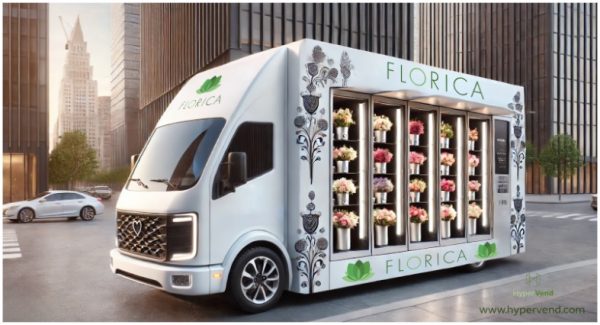
  1. Mobile Refrigeration Machines:
  • Serve as dynamic, mobile inventory hubs that restock vending machines based on demand.
  • Operate with GPS-enabled routing systems for optimal distribution efficiency, reducing operational costs and carbon footprint.

Together, this infrastructure minimizes the need for fixed retail locations and expensive logistical operations, enabling food brands to operate leaner and more profitably.
embracing-the-mobile-movement
Key Benefits of HyperVend for Food Brands
  1. Dominate Local Markets with 90% Less CapEx
HyperVend eliminates the need for physical retail locations, drastically reducing startup costs. For instance:
  • Traditional Setup: Opening a single retail store might cost upwards of $250,000, factoring in lease, construction, staffing, and utilities.
  • HyperVend Model: Deploying 10 smart vending machines in a local market could cost less than $25,000, including machine procurement, maintenance, and initial inventory.
By reallocating resources from infrastructure to marketing and product development, brands can focus on capturing market share.
  1. Data-Driven Market Penetration
The IoT-enabled vending machines provide valuable consumer insights, such as:
  • High-demand products
  • Peak purchasing times
  • Customer demographics
This data allows brands to optimize inventory, reduce waste, and adapt offerings to local tastes. For example, a smoothie brand might discover that protein-based drinks outperform in gyms, while fruit blends dominate in office spaces.
  1. Freshness and Quality Control
Mobile refrigeration units ensure that products are always stocked fresh, reinforcing consumer trust and brand loyalty. The ability to maintain a cold chain from production to point-of-sale ensures compliance with food safety standards, a critical factor for perishable goods.
  1. Enhanced Consumer Convenience
HyperVend’s vending machines provide 24/7 access to fresh food, meeting the needs of today’s on-the-go consumers. Features such as cashless payments, product previews, and instant discounts further enhance the shopping experience.
A Business Model for Rapid Scaling

Step 1: Market Entry with Minimal Risk

  • Pilot Deployment: Launch an initial fleet of vending machines in a target city to gauge demand. HyperVend’s low CapEx model allows brands to test the waters without significant financial risk.
  • Hyper-Localization: Use real-time data to tailor product offerings to local preferences, establishing a strong foothold in the community.

Step 2: Scaling Within the City

  • Hub-and-Spoke Model: Use mobile refrigeration machines as restocking hubs for vending machines, increasing product availability without the need for additional storage facilities.
  • Partnerships: Collaborate with local businesses to place vending machines in high-visibility locations, such as co-working spaces, fitness centers, and apartment complexes.

Step 3: Expanding to New Cities

  • Replicable Model: The infrastructure and processes developed in the first city can be easily replicated elsewhere, requiring minimal additional investment.
  • Digital Integration: Use centralized software to manage inventory, sales, and logistics across multiple cities, ensuring consistency and efficiency.

Step 4: Building a Franchise Ecosystem

  • Licensing Model: Offer franchise opportunities to local entrepreneurs, who can deploy and manage HyperVend infrastructure in their regions. This approach accelerates expansion while maintaining brand control.
  • Revenue Sharing: Generate additional income through licensing fees and a percentage of vending machine sales.

Case Study: A Smoothie Brand’s Journey with HyperVend
Background:

A mid-sized smoothie brand wants to expand beyond its home city but faced challenges with high retail costs and logistical complexities. They can partner with HyperVend to test their products in a neighboring city.

Implementation:
  • Deploy 15 smart vending machines in gyms, office parks, and residential complexes.
  • Use mobile refrigeration units to restock machines twice daily, ensuring freshness.
  • Collect data to optimize product selection, introducing new flavors based on customer preferences.

Results:

  • Achieve a 70% reduction in CapEx compared to opening retail locations.
  • Increase sales by 40% in the first three months with high machine uptime and product availability.
  • Expand to two additional cities within a year, replicating the successful model.

Conclusion

HyperVend’s on-demand perishable infrastructure is a game-changer for food brands seeking to dominate local markets and scale rapidly. By leveraging smart vending machines and mobile refrigeration units, brands can reduce CapEx by 90%, optimize operations with data-driven insights, and deliver fresh, high-quality products to consumers. This innovative approach not only democratizes market access for smaller brands but also provides a sustainable pathway for growth in an increasingly competitive industry.

HyperVend’s model represents the future of food distribution—efficient, agile, and customer-focused. For food brands ready to disrupt the market, there’s no better time to harness the power of this cutting-edge infrastructure.

For North and South America, chat here on EST time

label dismiss button
open chat widget